%20(1).svg)
Ab Training 2026 – 3 Ready-Made Workouts and Science-Based Guidelines

In brief:
Your abs are worth training like any other muscle group: Train them 2–3 times per week, aim for 5–20 working sets per week, and do most sets in the 7–15-rep range, with progressive overload.
A well-designed ab workout should prioritize controlled, high-quality repetitions rather than speed or sheer quantity. Here are the key evidence-based takeaways for ab training:
Pick one top-down movement (for example a cable crunch) and one bottom-up movement (for example a reverse crunch or a hanging knee raise).
Squats and deadlifts aren't enough to build the rectus abdominis or the obliques. Contrary to common belief, they primarily load the spinal erectors, not the abs.
The plank can build core endurance, but for muscle growth it's a weaker option than dynamic ab movements.
Advice to "activate your deep muscles" or "draw your navel in" is outdated when it comes to ab training.
Whether your abs are visible depends above all on your body-fat percentage. Their size, however, determines how prominent they look at a low body-fat percentage.
Ab training doesn't burn fat locally from the belly area.
Pregnancy, abdominal separation (diastasis recti), and pelvic-floor dysfunction require special consideration in ab training.
Three ready-made ab workouts
If you want to get started right away, choose the workout below that best fits your situation. These are examples rather than programs individualized for you. The full evidence-based rationale for optimal ab training, exercise selection, and set volume is explained in the rest of the article. If you'd rather not plan the workouts yourself, the AITOFIT app selects the exercises, weights, and reps for you, provides exercise instructions, and manages progression.
The same rule applies to all the workouts: the last 1–2 reps of a set should feel hard. When you can get all your sets to the top of the rep range with good technique, add load or move to a harder version. You can slot any of these workouts directly into your gym or home training program.
1. Ab workout at the gym – 2 times a week
Exercise | Sets × reps | Note |
|---|---|---|
Machine crunch | 3 × 8–12 | Keep the hips still and allow the spine to round |
Reverse crunch | 2 × 10–15 | Posteriorly tilt the pelvis before the first rep |
Cable rotation | 2 × 10–15 | Control the return phase throughout |
2. Home workout with no equipment – can be done 2+ times per week
Exercise | Sets × reps | How to add load |
|---|---|---|
Crunch over a cushion or rolled-up mat | 3 × 8–15 | Backpack, water bottle, or weight on the chest |
Reverse crunch | 3 × 10–15 | Straighten the legs to make the exercise harder |
Side bend in a side-lying position | 2 × 8–12 | You can hold a weight on the hip |
At home, range of motion and exercise variations become more important because adding external load is more difficult. Placing a cushion or rolled-up mat under your back, for example, allows the spine to extend before the crunch and gives the abs a longer range of motion. If you include bicycle crunches, bring one knee toward the opposite side of the torso while the other leg stays extended. For example, bring the left knee toward the right side, then alternate to the right knee; continue alternating without rushing the movement. If a side-lying side bend feels too difficult at first, start with a static side plank and progress to side raises once you have enough control. For a side plank, lie on your side with your feet stacked, the left foot over the right foot, and support your upper body on your right forearm. Keep your body in a straight line from head to feet with the core engaged, hold briefly, then switch sides.
3. A ten-minute workout for a busy day
Exercise | Sets × reps |
|---|---|
Cable crunch (or, at home, a crunch over a raised surface) | 3 × 10–15 |
Hanging knee raise (or reverse crunch) | 3 × 10–15 |
Two exercises are enough when one works from the top down and the other from the bottom up. These bottom-up movements are often grouped under the label "lower ab exercises," although they do not isolate the lower abs. This approach loads the rectus abdominis from both directions and gives the abdominal muscles as a whole a strong stimulus. Take the sets close to muscular failure.
Ab training: the biggest myth in strength training?
Ab training is one of the most misunderstood topics in strength training. Some coaches say you don't need to train the abs at all because squats and deadlifts take care of them. Others simply have you do a few crunches at the end of a session. Neither approach is particularly well founded.
The rest of this article looks at what the research evidence and our practical coaching experience actually suggest: which muscles are involved, how to brace the core correctly, how much to train, and which exercises work best.
Which muscles are trained in ab training?
The abdominal musculature is made up of four main muscles: the rectus abdominis, the external oblique, the internal oblique, and the deep-lying transverse abdominis. A strong core also involves the lower back, hips, and pelvic floor, which work with the abdominal muscles to stabilize the trunk. In addition, some people have a small pyramidalis muscle, which has minor functional significance.
Muscle | Location | Main function | Best trained by |
|---|---|---|---|
Rectus abdominis | Superficial layer, center | Spinal flexion | Crunches, reverse crunches, leg raises |
External oblique | Superficial layer, sides | Rotation and side bending, assists in flexion | Rotations, side bends, anti-rotation exercises |
Internal oblique | Middle layer, sides | Rotation and side bending, assists in flexion | Rotations, twists, anti-rotation exercises |
Transverse abdominis | Deep layer | Maintaining intra-abdominal pressure, stabilizing and supporting the spine | Heavy compound lifts, bracing exercises, breathing technique |
Pyramidalis | Above the pubic symphysis | Tenses the linea alba; absent in about 10–20% of people | – |
What people usually call the "six-pack" is the rectus abdominis. The tendinous bands running across it divide the muscle into segments, of which three pairs — six in total — are typically visible if the layer of fat on top is thin enough.
The abs are no different from other muscles: their fiber distribution is roughly half slow-twitch and half fast-twitch, so the rectus abdominis is not simply an endurance muscle built for hundreds of sit-ups. The core has three main jobs: creating stability, transmitting force between the limbs, and producing movement. Core strength therefore matters not only in ab exercises but also when the upper body and lower body transfer force through the trunk during resistance training. These roles also explain why balanced core workouts use different movement patterns rather than relying on one exercise.
Are squats and deadlifts enough to train the abs?
In short: no. Heavy compound lifts are excellent training for the spinal erectors, not for the abs. In the squat and deadlift, the spinal erectors' EMG activity exceeds 100% of a maximal voluntary contraction when the load is 80–90% of maximum (Nuzzo et al. 2008). These lifts also train your ability to generate intra-abdominal pressure and brace the entire core.
For the rectus abdominis, however, they provide relatively little direct stimulus. In several EMG studies, rectus abdominis and oblique activity in the squat and deadlift remains consistently below 25% of maximum, regardless of the load used (e.g. Aspe & Swinton 2014; Willardson et al. 2009). The spine's job in these lifts is to remain neutral, so the rectus abdominis works mostly isometrically and at a fairly low level.
For comparison, in one study, ab activity during a 6RM back squat was roughly equivalent to that seen in a front plank performed with an additional 20% of body weight (van der Tillaar & Saeterbakken 2018). That's a perfectly reasonable supporting stimulus, but it isn't the same as heavy loading through a full range of motion. If you're already doing squats and deadlifts, it is therefore reasonable to ask whether you need separate plank work at all — probably not.
The practical conclusion: compound lifts build and strengthen the spinal erectors. If you want to build or strengthen the rectus abdominis or the obliques, you need exercises in which the spine flexes. On the other hand, if your program already includes plenty of heavy squats and deadlifts, separate spinal-extension work may not need much attention. In that case, it makes sense to emphasize flexion and rotation movements instead.
(See also: back workout – how to train your back effectively)
Do the deep abs need to be activated separately?
The abdominal wall works as a single unit, and although conscious technique can slightly emphasize the transverse abdominis and other deep core muscles, there is no benefit to trying to isolate it for strength or muscle growth. The transverse abdominis has received an exceptional amount of attention because reduced activation was previously associated with back pain. That finding reflected a correlation, however. In practice, the abdominal wall works as a unit, and you cannot voluntarily isolate one individual muscle.
Separate activation work is justified in certain situations: after childbirth, with abdominal separation, in pelvic-floor dysfunction, and in the early stages of rehabilitation. These situations require individual consideration, which is beyond the scope of this article. Read more: gym training during pregnancy. Ideally, these situations should also be assessed by a qualified physiotherapist or doctor.
How should you breathe in ab training?
You generally don't need to overthink breathing during ab exercises. Drawing the navel or belly button in or bracing separately isn't necessary, and in crunching movements a strong brace can actually work against the spinal flexion the exercise is intended to produce. Breathing normally or exhaling during the crunch is enough. In big compound lifts, by contrast, you want to hold your breath to maximize core support. Read more: breathing technique in gym training.
The exception is anti-extension exercises, such as the ab wheel and the plank. In those, the point is precisely to resist spinal extension, so the core is kept braced throughout the set.
How often should you train the abs?
For most people, 2–3 times per week is a good starting point. The same general frequency guideline applies to the abs as to other muscle groups: a muscle group develops best when it receives a training stimulus at least twice per week (Schoenfeld et al. 2016; Baz-Valle et al. 2022).
For most people, the abs recover quickly, but the core muscles still need recovery time. Two to three core workouts per week is therefore a practical default as long as the volume of each individual session remains moderate.
Note. If you increase ab training sharply, it can affect your performance in the squat, deadlift, and overhead press because sore abs can make it harder to brace the core. Add volume gradually, and avoid placing your hardest ab sessions immediately before heavy leg days.
How many sets and reps for the abs?
The same general range used for other muscle groups applies to the abs: 5–20 working sets per week covers most people (Schoenfeld et al. 2017). As with other resistance training, weighted core exercises are especially useful when the goal is to build muscle because the load can be increased gradually.
Goal | Frequency | Working sets/wk | Rep range | Note |
|---|---|---|---|---|
Muscle growth | 2–3× | 5–20 | Mostly 7–15 | Progressive loading should be possible |
Strength and support for the compound lifts | 2–3× | 5–10 | 3–8 | Clear progression in intensity |
General health and back support | 2× | 5–12 | 8–15 + isometric 3–10 s reps | Use a variety of movement directions |
Two principles apply when choosing a rep range. First, most of the work is best done in a range where you can progressively add load — typically 7–15 reps for weighted exercises. Second, varying rep ranges can be useful: heavier sets of 5–8 reps develop the core's force production effectively, while longer sets of 15–25 reps work well for bodyweight exercises, where adding resistance is more difficult.
Set intensity matters more than the exact rep count. In sets of 7–15 reps, aim for RIR 0–2, meaning you have at most two reps left in reserve. In bodyweight exercises where sets extend beyond 15–20 reps, take them closer to failure because, in longer sets, the mechanical tension needed for growth builds mainly during the final reps.
Rest periods can be somewhat shorter than for compound lifts. For most people, 1–3 minutes between sets is enough because the abs recover quickly between sets.
Effective ab training is built around movement patterns
The clearest way to structure ab training is to think in terms of movement patterns. The best core exercises do not all look the same: effective core exercises can be grouped into four main directions — flexion, extension, rotation, and side bending (lateral flexion). Balanced core workouts can also include anti-rotation and anti-extension exercises, in which you resist movement in the relevant direction.
Movement direction | Example exercises | How to add load? |
|---|---|---|
Flexion, top-down | Cable crunch, machine crunch, decline sit-up | Added weight, cable resistance, bench angle |
Flexion, bottom-up | Reverse crunch, hanging knee or leg raise | Ankle weights, decline bench, straightening the legs |
Rotation | Cable rotation (high, low, and horizontal), landmine rotation, Russian twists, medicine ball rotation | Cable resistance, lever-arm length |
Side bending | Cable side bend, farmer's carry, single-arm farmer's carry | Load, lever arm (e.g. a ball on the cable) |
Anti-rotation and anti-extension | Ab wheel, Pallof press, plank variations, dead bug | Lever arm, weight vest, cable |
Flexion movements and the ab wheel are among the most direct ways to train the rectus abdominis. Rotations and side bends place more direct load on the obliques. Anti-movement exercises add another way to develop core stability and core endurance. For a dead bug, lie on your back in the starting position with both legs bent to roughly a 90-degree angle, shins parallel to the floor, and your arms overhead. Keep the arms extended and move the arms and legs in opposite pairs: slowly lower the left arm and right leg while keeping the core engaged and the shoulder blades against the floor, return to the start, then lower the right arm and left leg. The opposite arm and leg move together; continue alternating. If time is short, one top-down flexion movement and one bottom-up movement cover most of your bases.
Dynamic training is probably more effective than static training for building the abdominal and back muscles (Contreras & Schoenfeld 2011). If you use isometric exercises, aim to make them hard enough — for example by adding load or lengthening the lever arm — rather than just increasing the hold time.
The rectus abdominis is innervated segmentally by several nerves, and EMG studies suggest that different exercises can emphasize its regions slightly differently: bottom-up movements, such as the reverse crunch and hanging leg raise, emphasize the lower portion, while top-down crunches emphasize the upper portion. The differences are moderate, however, and you cannot isolate the muscle's segments from one another. There is no evidence that "special lower-ab training" produces a visibly different result.
The practical solution is simple: include one exercise from each relevant movement direction in your program.
The best ab exercises at the gym
Cable crunch.⭐⭐⭐⭐⭐
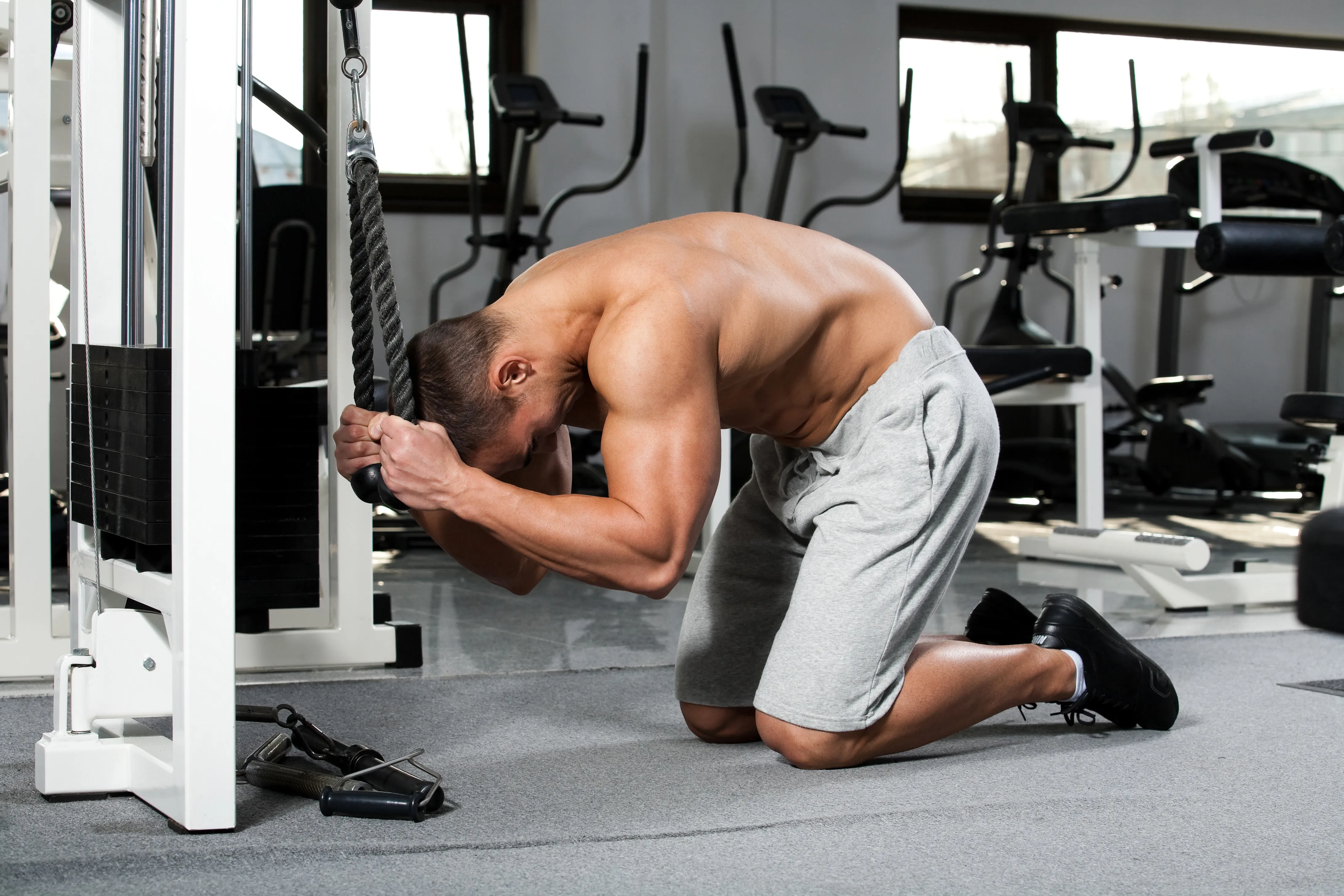
Alongside the machine crunch, this is one of the best exercises for the abs, especially the rectus abdominis. Start in a kneeling position with a rope handle, keep the hips still, and bring the rib cage toward the pelvis by rounding the spine.
Machine crunch.⭐⭐⭐⭐⭐
Similar to the cable version, but performed on a machine. In the seated position, keep your feet flat and use proper form rather than trying to move the stack quickly. This makes it easier to keep the technique consistent and adjust the load quickly, which is useful for progressive ab training.
Hanging knee raise or leg raise.⭐⭐⭐⭐⭐
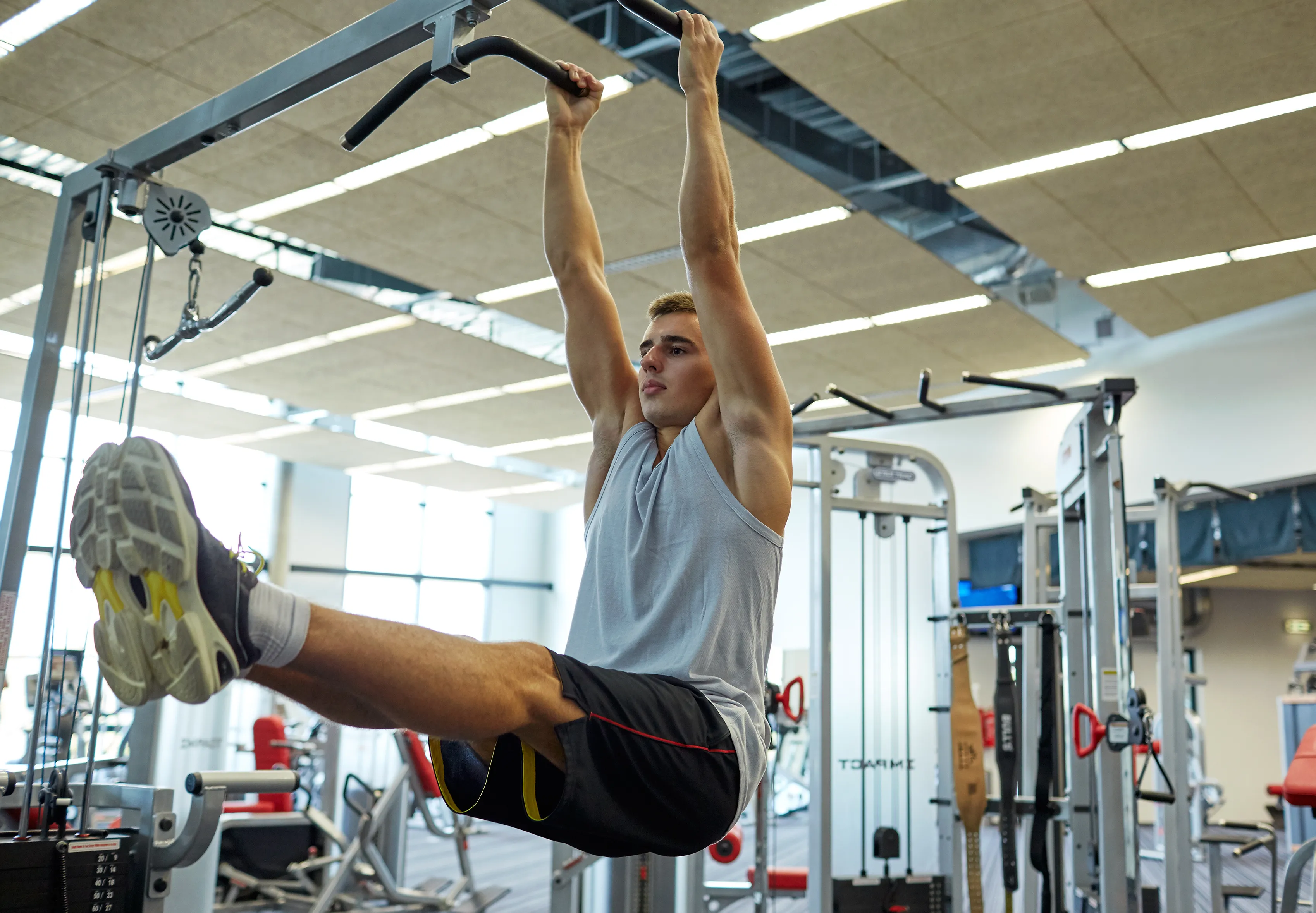
An excellent bottom-up movement, but only when performed with good technique. From the hanging starting position, keep your arms straight and raise the knees under control. Simply swinging the legs shifts much of the work to the hip flexors. Actively tilt the pelvis back and roll it toward the rib cage instead. Grip endurance can become the limiting factor before the abs do, in which case a back-supported version or lifting straps can help.
Reverse crunch.⭐⭐⭐⭐⭐
This trains the same movement direction as the hanging raise but is easier to learn. Start with your knees bent, tilt the pelvis back, and tighten the glutes and abs so that the lower back presses against the surface. Initiate the movement from the pelvis rather than the legs and lift the hips only a few inches. Once you can perform 15–20 reps with bodyweight, progress to straight legs for a harder variation. Keeping the legs straight and the legs extended farther from the hips increases the lever arm. You can also move to a decline bench and add load between the ankles.
Ab wheel.⭐⭐⭐⭐☆
An exceptionally effective exercise, but one that deserves a note of caution. With the ab wheel, the rectus abdominis works at long muscle lengths while resisting spinal extension, and much of the work is isometric-eccentric. Heavy eccentric loading can cause substantial muscle damage and soreness, so recovery from an extremely hard ab-wheel session may take longer. Start conservatively and progress like this: ab wheel from the knees → from the knees with a weight vest → standing with band assistance → standing → standing with a weight vest.
Cable rotations and side bends.⭐⭐⭐⭐☆
It can be difficult to progressively load the obliques with free weights alone. Cables and weight-stack machines make progression easier to measure. For a standing cable rotation, begin in a standing position with your feet shoulder-width apart, hips square, and the handle around shoulder height. Keep the arms extended as you rotate through the upper body under control. Rotations can also be performed from high, low, or horizontal positions, and the starting position can vary from the floor to kneeling and standing.
Plank and its variations.⭐⭐⭐
The traditional plank is a reasonable isometric core exercise that can build core strength and core endurance, but it is a relatively poor choice for muscle growth, and progression can be difficult to apply and measure. For a forearm plank, lie face down, set the elbows below the shoulders, keep the entire body in a straight line, and keep the core engaged. If you use the plank, make it progressive — for example by lengthening the lever arm or adding load. A plank with a lengthened lever arm and a posterior pelvic tilt produces clearly greater ab activity than a regular plank (Schoenfeld et al. 2014).
Beginner ab training: how to progress in the first months
Beginner ab training doesn't need to be complicated. Two sessions per week, two exercises per session, and a clear workout plan for adding load will take you a long way. Start with proper form and controlled repetitions, then add an extra challenge only when the current version is comfortable. You can use either the gym or home ab workout from the beginning of the article as written.
More important than exercise selection is what happens from week to week:
Weeks 1–2: the goal is to choose suitable exercises, learn controlled technique, and perform each movement through a full range of motion.
Weeks 3–8: add load whenever you can complete all your sets at the top of the rep range with good technique. On cables and machines, increasing the load by one plate or about 2.5 kg at a time works well. With bodyweight exercises, add reps first.
Keep the same main exercises long enough to make measurable progress on them. Switching too frequently makes progression difficult to track, but following exactly the same program for too long can also slow progress and make the training unnecessarily one-sided.
If you're just starting strength training, first make sure the structure, volume, and progression of your overall program are in order. AITOFIT can help with this.(More reading: beginner workout program and how many times a week to go to the gym)
How do you fit ab training into your program?
You don't need to give the abs their own training day. For most people, training them alongside the rest of your strength work 2–3 times per week is enough. Ab exercises can be added to an existing routine on most training days, regardless of your training split. If your goal is to lift as much as possible in the squat or deadlift, however, it is best to do heavy ab training afterward or on a different day. In our coaching experience, ab exercises fit well at the end of a session for most people.
These principles help:
Don't do hard ab training right before a heavy squat or deadlift. Tired or sore abs can impair your bracing and thereby reduce your performance.
Spread the volume across several days. Two sessions of 3–4 sets work better for most people than doing 8 sets in one go because set quality stays higher.
Ab training can be done well at home. How do you add load?
The abs are easy to train at home because many effective bodyweight exercises require no equipment. The main challenge is adding load or choosing a harder variation. A glute bridge can complement a home core routine, but it should not replace direct ab exercises. Practical solutions include:
Lengthening the lever arm. As the lever arm gets longer — for example, when you straighten the legs in a reverse crunch — the movement becomes considerably harder than it is with bent legs.
Lengthening the range of motion. In a floor crunch, the spine cannot extend very far. Placing a cushion, rolled-up mat, or exercise ball under the back allows a longer range of motion and loads the rectus abdominis through a greater stretch. The purpose of the ball is specifically to increase the range of motion, not to make balancing more difficult.
External load. A backpack on your back or a dumbbell on your chest works surprisingly well. An ab wheel is an inexpensive and effective piece of equipment for home training and a useful way to develop core strength.
(Read more: home training vs the gym)
The 5 most common mistakes in ab training
1. No progression. The load, the number of reps, or the difficulty of the exercise should increase over time.
2. Only isometric holds. Isometric holds alone are not ideal for ab training. Simply extending the hold time in a plank, for example, is not a particularly effective way to make the exercise progressively harder. You can, however, increase the difficulty by adding load or lengthening the lever arm by moving the hands farther forward.
3. The movement is done with the hip flexors. In sit-ups, the abs contribute most during the initial crunching phase, after which the hip flexors play an increasingly large role. If the goal is to train the abs as directly as possible, crunching movements are usually a better option than full sit-ups.
4. Partial range of motion. Loading through a long range of motion is valuable for growth, so use a range in which the abs can lengthen and shorten under control.
Actively drawing the navel in. Ab training does not require constantly drawing the belly button toward the spine — that is outdated advice. Normal breathing and actively bracing the abs are enough in most exercises.
When do the abs become visible?
Ab visibility depends primarily on the size of the abdominal muscles, overall body fat, the distribution of subcutaneous fat, genetics, lighting, and posture. Building thicker abdominal muscles can make six-pack abs more prominent, but fat loss is still what reveals them.
There is no single body-fat percentage at which the abs become visible. In many men, the abs start to stand out more clearly as body fat drops to around 10–15%, and in women around 18–24%, but individual variation is substantial.
This is where muscle size matters: the thicker the abs, the higher the body-fat percentage at which they can still stand out. If your goal is visible abs, this is one of the most important reasons to train them directly. Well-developed abs become visible sooner and look fuller as body fat decreases.
Spot fat reduction doesn't work. Six weeks of ab training didn't reduce subcutaneous fat in the abdominal area compared with a control group (Vispute et al. 2011). Ab training builds muscle; it does not burn the fat directly over that specific area. Over the long term, fat loss requires an energy deficit — that is, energy expenditure must exceed energy intake. Diet, everyday activity, and exercise all contribute to overall energy balance.
That said, studies have also observed some localized fat mobilization near a trained muscle under certain conditions. This does not mean that training the abs visibly burns the fat directly over the abdomen. Its practical significance is small, and it does not change the basic message: visible abs require sufficiently developed abdominal muscles and a sufficiently low level of subcutaneous fat.
(Read more: toning and fat loss at the gym)
Do strong abs help with back pain and posture?
This is a common reason to start ab training, and the topic is surrounded by both reasonable expectations and exaggerated claims.
What's true: Strength training has been linked to a lower risk of sports injuries (Lauersen et al. 2014). The core muscles play an important role in controlling the lumbar spine, and a strong core helps resist unwanted spinal movement and maintain posture under load. Core training is therefore a sensible part of a broader program aimed at building a resilient, well-functioning body. Strong abs may also help support the spine in situations where that can reduce the risk of back pain.
What's exaggerated: Ab training is not, by itself, a treatment for back pain, nor does it fix posture. Low-back pain typically has several contributing factors, of which muscle strength is only one. These can include overall load, sleep, stress, and physical activity levels. Posture depends more on habits, anatomy, and postural control than on ab strength alone. Training the abs and the rest of the core can, however, improve trunk control and your ability to maintain the positions you want under load.
If you have prolonged or recurring back pain, it's worth having it assessed by a healthcare professional.
Is ab training safe for the back?
For most people, yes. Ab training is a normal and generally safe form of exercise when the load and range of motion are matched to your training background and increased gradually. Loaded spinal flexion is also a normal movement for the body.
A few things are still worth keeping in mind, especially if you've had back symptoms before:
Progress gradually and learn the technique. A large, sudden increase in training volume or load adds unnecessary risk. Good technique is important for safe and productive training.
Avoid extreme ranges of motion with heavy load. With the ab wheel in particular, keep the range of motion within what you can control throughout the entire rep.
If an exercise strains your back, swap it out. Cable and machine exercises are often convenient alternatives because the load and range of motion are easy to adjust.
Individualize your training. Some people are more sensitive to flexion, others to extension, and others to rotation. There is rarely one universally right or wrong exercise; what matters is how your body responds to load. If an exercise causes pain, replace it with another movement in the same direction and adjust the load as needed.
What the research evidence doesn't yet tell us
There is surprisingly little direct research on ab hypertrophy from conventional strength training. Most ab research focuses on EMG activity, strength, endurance, or low-back rehabilitation. Some hypertrophy data comes from electrical-stimulation studies, which do not translate directly to muscle growth from conventional training, and from ultrasound studies, which have often examined abdominal muscle thickness or the structure of the deep muscles.
In practice, this means that recommendations for ab training rely largely on general principles of muscle growth: sufficient load, adequate range of motion, progression, and sensible volume — together with coaching experience. At present, the evidence provides no strong reason to assume that the basic principles of ab hypertrophy differ substantially from those that apply to other skeletal muscles.
How does AITOFIT program ab training?
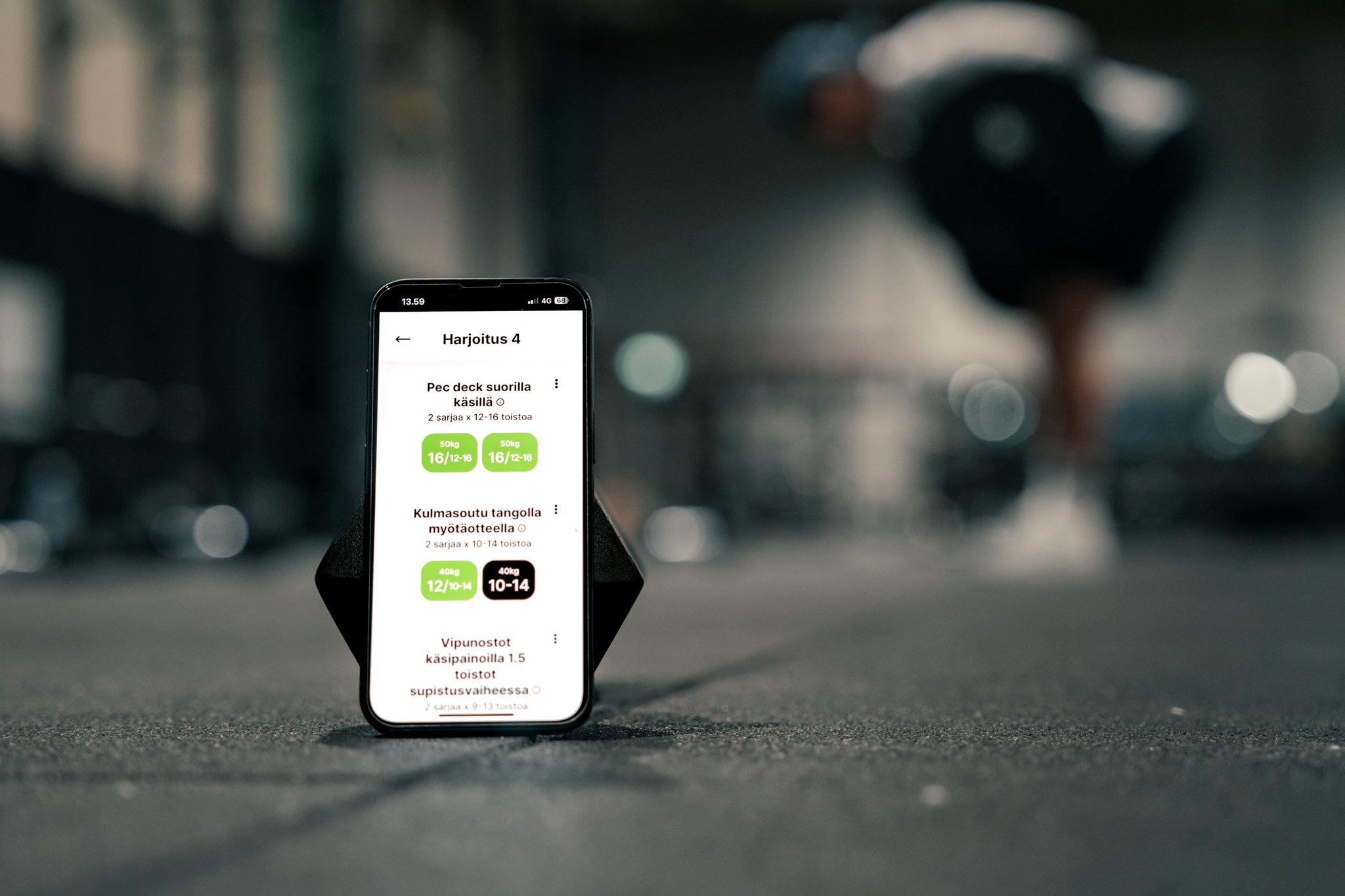
AITOFIT builds your training program so that ab training is a balanced part of the overall plan. The app takes into account how much your core is already being loaded by the rest of your training, selects exercises across movement directions, and manages load and rep progression automatically.
In practice, this means you don't have to decide for yourself how to structure the training — for example, whether you need more rotational work or whether your volume is too high relative to heavy squat days. The app also swaps exercises when appropriate and manages exercise progression in home workouts.
You can try the AITOFIT app free for 9 days and see what kind of ab training it creates for you.
Frequently asked questions about ab training
How often should you train the abs?
For most people, 2–3 times per week is a good starting point. You can train the abs more often if the volume of each session is kept moderate.
Can you train the abs every day?
You can, if the volume per session is low, but it's usually not necessary. The abs support your performance in the squat, deadlift, and overhead press, for example, so constant loading can impair your performance in the compound lifts.
Do crunches build the abs?
Yes. When performed through a full range of motion with sufficient load and progressive overload, crunches can build the rectus abdominis and the obliques. Adding weight or using a cable makes the crunch one of the best exercises for progressively loading the rectus abdominis.
Does ab training burn belly fat?
Not locally: six weeks of ab training didn't reduce fat in the belly area compared with a control group (Vispute et al. 2011). Fat loss is determined by energy balance and overall activity.
Is the plank enough for ab training?
Not if the goal is muscle growth, since the plank mainly develops abdominal endurance.
Can you train the lower and upper abs separately?
You can emphasize them somewhat, but not isolate them: bottom-up movements emphasize the lower portion and top-down movements the upper portion. Keep one exercise from each direction in your program.
At what body-fat percentage do the abs show?
Typically around 10–15% in men and around 18–24% in women, but individual variation is large. As with any other muscle, diet affects how visible the abs are. Fat distribution is hereditary to a significant extent, and well-developed abs can stand out even at a higher body-fat percentage.
Do you have to use added weights in ab exercises?
You don't have to, but it makes progression considerably easier. Alternatively, you can lengthen the lever arm or the range of motion, or move to a harder version of the exercise. As a rule of thumb, if you're doing more than 30 reps, the exercise is too easy.
Should you train the abs at the start or the end of a session?
Timing is not especially important — you can train the abs at any point in the session — but avoid heavy ab training before the squat or deadlift.
Summary
If the whole article had to be boiled down to one sentence, it would be this: the abs are worth training just like any other muscle. Sufficient load, a full range of motion, progression, and sensible volume 2–3 times per week will take you a long way. Compound lifts build core stability and train the spinal erectors, but developing the rectus abdominis requires exercises in which the spine flexes against resistance.
Ab visibility depends largely on body-fat percentage, but muscle size matters too. Both are therefore relevant if visible abs are the goal.
Most importantly, ab training should be part of a planned program rather than a random add-on at the end of a session.
Try the AITOFIT app free for 9 days and get ab training programmed as part of your overall training plan, with appropriate volume and progression.Sources: Aspe & Swinton 2014; Baz-Valle et al. 2022; Contreras & Schoenfeld 2011; Lauersen et al. 2014; Moraes et al. 2009; Nuzzo et al. 2008; Schoenfeld et al. 2014; Schoenfeld et al. 2016; Schoenfeld et al. 2017; Tayashiki et al. 2016; van der Tillaar & Saeterbakken 2018; Vispute et al. 2011; Willardson et al. 2009.
Author: Julius Granlund, M.Sc. in Exercise Science (Exercise Physiology), University of Jyväskylä | Reviewed by: Tapio Tulenheimo, M.Sc. in Exercise Science (Exercise Physiology), University of Jyväskylä
Individualized and evidence-based personal training made easily accessible to everyone.


